

![[Translate to English:]](/fileadmin/_processed_/2/e/csm_Header-Springbock_5c13e0cfb8.jpg "[Translate to English:]")
The springbok is one of the most iconic antelope species of southern Africa and a true symbol of Namibia’s vast open landscapes. Its name derives from its characteristic jumping behavior, in which it launches itself several meters into the air with stiff legs. These distinctive leaps are not only fascinating to observe but also a display of alertness and agility.
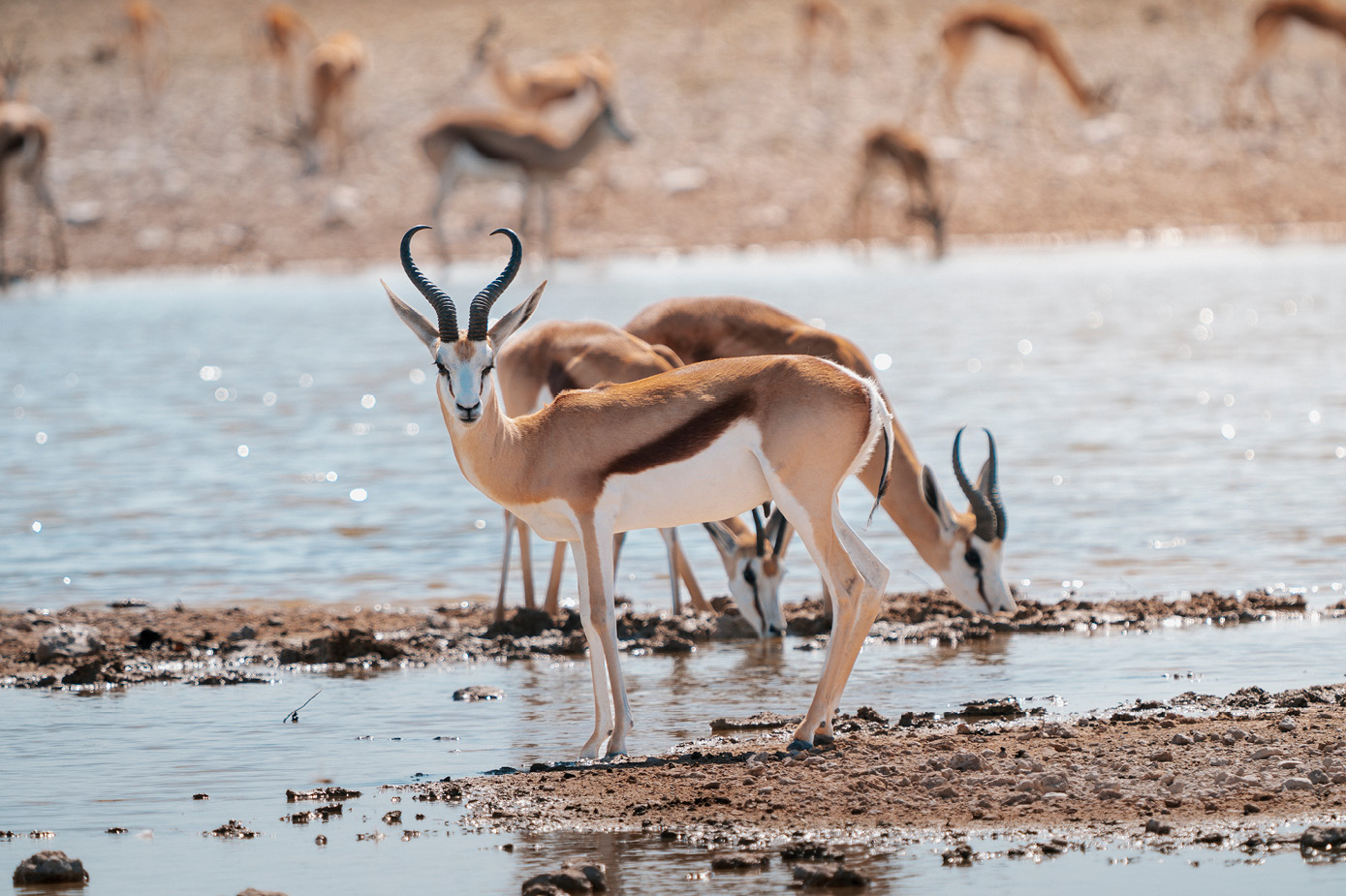
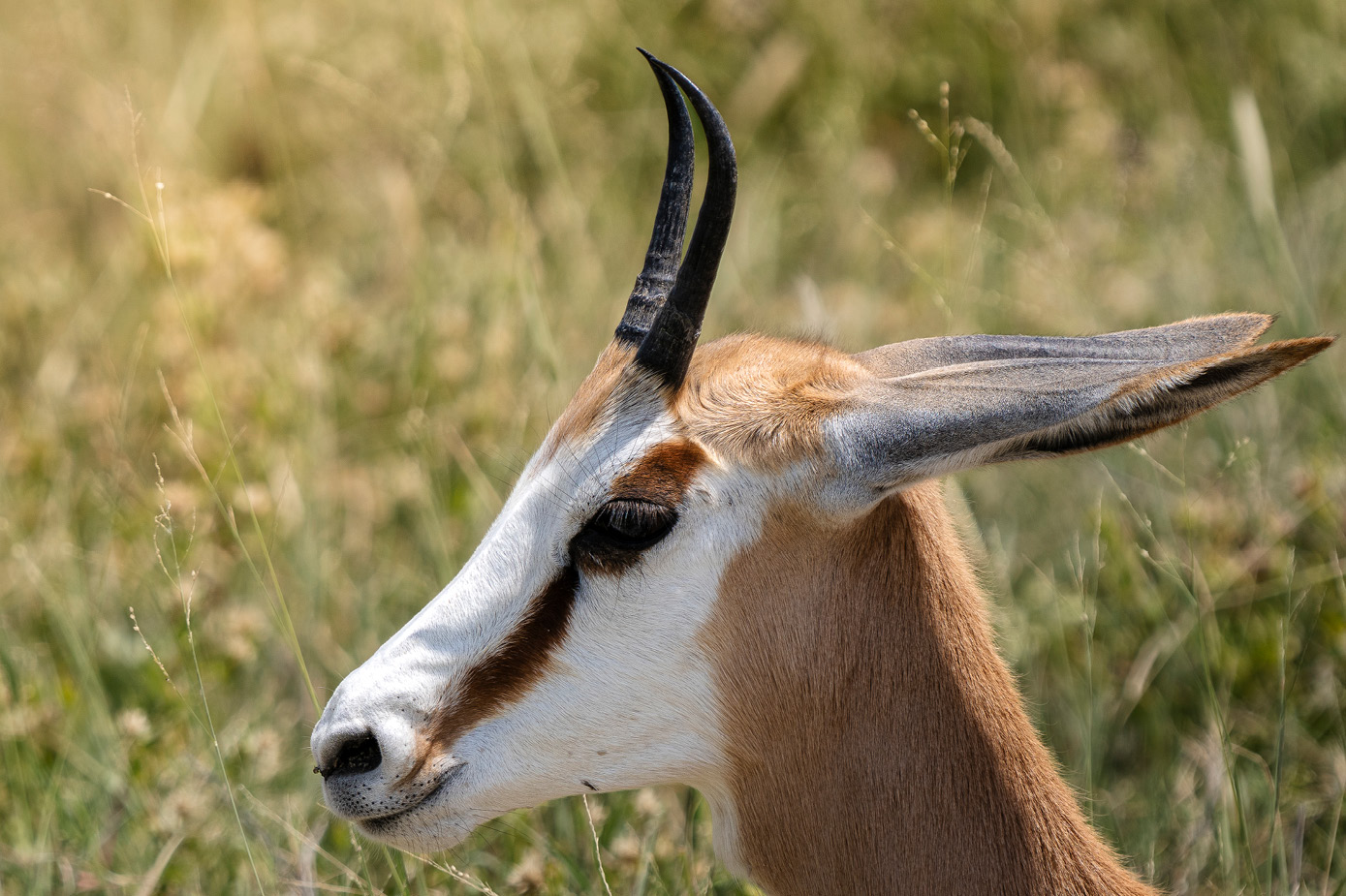
Compared to many other antelope species, the springbok appears light and almost delicate. Both males and females carry slender, lyre-shaped horns, with those of the rams being more pronounced. Its striking coat (white underparts, a light brown back, and a dark flank stripe) makes it unmistakable in the open plains.
Antidorcas Marsupialis
The Springbok – Elegant, Alert, and Adapted
The springbok is a medium-sized antelope found in the dry regions of Namibia, Botswana, and South Africa. It thrives particularly in open savannas, semi-desert areas, and gently rolling bushland.
Its physique is perfectly adapted to these conditions: light, fast, and enduring. As it can meet most of its water requirements through its diet, it is also found in very arid regions.
Icon of the Open Plains
An elegant and fast savanna antelope
The springbok is famous for its unique behavior known as “pronking.” During this display, it leaps straight into the air with stiff legs, often repeatedly. This behavior is believed to signal strength to predators or communicate alertness within the group.
In the open landscapes of central Namibia, springbok typically live in herds that can vary greatly in size. Under favorable conditions, large groups may form, while in drier periods, smaller groups or loose associations are more common. Within these herds, vigilance is constant, some animals remain on watch while others graze.
Springbok are exceptionally well adapted to life in arid environments. They combine different feeding strategies, grazing on grasses as well as browsing on leaves and herbs. This flexibility allows them to find sufficient nutrition even during times of scarcity.
Reproduction is closely linked to environmental conditions. After good rains, increased food availability supports the successful rearing of young. Usually, a single lamb is born, which spends its first weeks hidden in vegetation for protection.
Despite their relatively small size, springbok possess remarkable speed and endurance. Their slender build allows for rapid changes in direction and sustained flight, helping them evade predators such as cheetahs, leopards, and jackals.
Adult males are generally more robust and may defend small territories for certain periods, while females and young tend to form more fluid groups. This flexible social structure is a key factor in the species’ success.
Today, the springbok stands as a symbol of adaptability and elegance, representing the resilience of wildlife in Africa’s dry and open landscapes.